Protective coatings are one of the most widely used methods of corrosion control, yet their performance depends on the condition of the surface they are applied to. Even the most advanced coating systems will fail if surface preparation is insufficient.
Abrasive blasting is a key step in preparing that surface. It removes rust, mill scale and contaminants while creating the surface profile needed for coatings to bond effectively. Without a consistent anchor pattern and adequate cleanliness, coatings are more likely to fail prematurely.
The abrasive used in this process has a direct impact on the result. Variability in particle shape, strength or cleanliness can affect surface profile, peak density, and the presence of embedded contaminants-factors that influence coating adhesion and long-term performance.
At GMA, the focus has been on supporting controlled, repeatable surface preparation. GMA Garnet’s inherent hardness, toughness, density and angularity enable effective removal of millscale, rust and coatings while maintaining a consistent surface profile. This helps reduce variability during blasting and supports more reliable coating adhesion over time.
These are not always visible advantages-but they are part of the broader system that supports effective corrosion control.





 GMA ToughBlast™
 GMA SpeedBlast™
 GMA NewSteel™
 Oil & Gas
 Industrial Fabrication & Maintenance
 Marine & Ship Building
 TruCost Blast Calculator
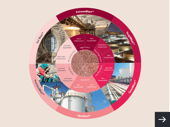 Product Selector
 Brochure | GMA Garnet Blast Abrasives
 News: GMA's Roadmap to Sustainability
 GMA ExcelCut
 GMA ProCut™
 GMA ClassicCut™
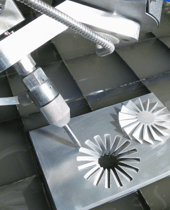 Metal fabrication
 Glass cutting
 Stone cutting
 Case Study | GMA ClassicCut | Smith and Nephew
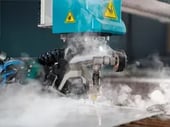 Why is Garnet the preferred abrasive in Waterjet cutting?
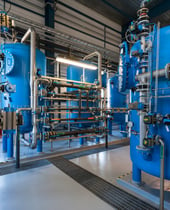 Water Filtration
 Rubber Fillers
 Anti-skid Products
 Ilmenite Sand
 Pyroxene
 Rutile