
You’re currently viewing the Americas website.


You’re currently viewing the Americas website.
Would you like to switch countries or language?


 GMA ToughBlast™
 GMA SpeedBlast™
 GMA NewSteel™
 Oil & Gas
 Industrial Fabrication & Maintenance
 Marine & Ship Building
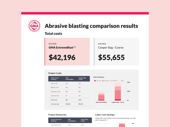 TruCost Blast Calculator
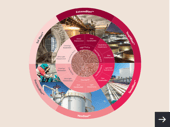 Product Selector
 Brochure | GMA Garnet Blast Abrasives
 News: GMA's Roadmap to Sustainability
 GMA ExcelCut
 GMA ProCut™
 GMA ClassicCut™
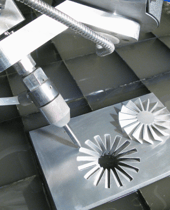 Metal fabrication
 Glass cutting
 Stone cutting
 Case Study | GMA ClassicCut | Smith and Nephew
 Why is Garnet the preferred abrasive in Waterjet cutting?
 Water Filtration
 Rubber Fillers
 Anti-skid Products
 Ilmenite Sand
 Pyroxene
 Rutile
-
Share




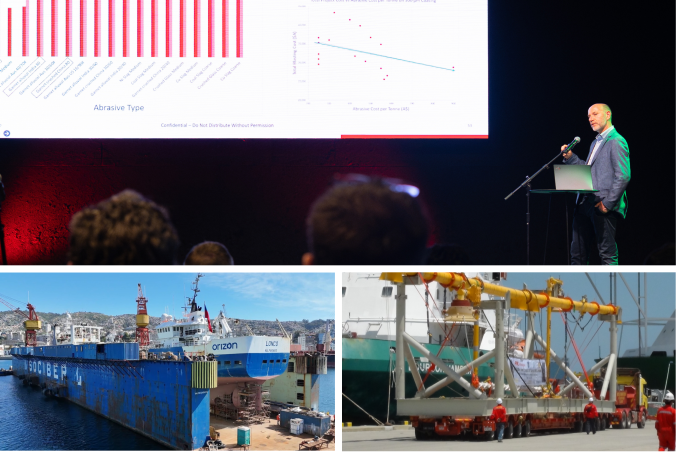
A new study from GMA Garnet Group examines how abrasive performance influences productivity, project costs and sustainability, challenging the conventional approach to abrasive selection.
The paper was accepted for publication by the Australasian Corrosion Association: Dr C. I. C Manger, P. Mitchell. “Staying Ahead in a High-Cost Economy: Making Smart Abrasive Choices for Productive, Efficient and Sustainable Surface Preparation”, Australasian Corrosion Association Technical Symposium 2026, Melbourne.
For abrasive blasting contractors, selecting the right abrasive is about more than meeting surface preparation specifications. It can directly influence how efficiently a project is completed, the resources required and the overall cost of the work.
Yet abrasive selection is often influenced by purchase price, with costs varying significantly between products and suppliers. While price per ton is easy to compare, it provides limited insight into the true cost of preparing a surface.
A technical paper by GMA Garnet Group's Dr. Christopher Manger and Pete Mitchell, Staying Ahead in a High-Cost Economy: Making Smart Abrasive Choices for Productive, Efficient and Sustainable Surface Preparation, explores this challenge through controlled blast testing, cost modeling and real-world contractor trials.
The paper examines how abrasive characteristics and operating conditions affect performance, providing a practical, evidence-based approach to evaluating abrasive value.
What drives the total cost of blasting?
The commercial impact of abrasive selection becomes clearer when performance is measured against the full cost of completing a blasting project.
Faster surface preparation can reduce labor and equipment hours, while lower abrasive consumption can reduce material requirements, handling and disposal costs. The relative importance of these factors depends on the operating environment and the surface being prepared.
To investigate these relationships, GMA technical experts conducted controlled blast trials across a range of GMA and other garnets, slag, staurolite and crushed glass abrasives, using the results to model total blasting costs under different project conditions. The GMA TruCost blasting calculator was used to model total blasting costs, which utilizes the simple but effective total cost model developed by the US Department of Navy.
Discover how much your blasting abrasive costs you
For a 1,000 m² mill scale removal project modelled under typical Australian operating conditions, the difference between the lowest and highest total-cost abrasives exceeded AUD $15,000, with the highest-cost option more than doubling the total project cost.
The analysis also revealed how changes in labor rates and disposal costs influence the relative value of different abrasives. Higher disposal costs placed greater financial pressure on products with high consumption rates, while changes in substrate shifted the performance and cost advantages between abrasive grades.
The modelling highlighted how efficient abrasives can improve sustainability. For example, contractor CO2 emissions resulting from local transport and blasting can be reduced by up to 60% through selection of a highly efficient GMA Garnet™ abrasive.
For contractors, these variables can materially change the economics of a project. Understanding how an abrasive performs against the specific surface preparation requirements and operating costs provides a more reliable basis for selection than purchase price alone.
Contractor trials demonstrate measurable performance gains
The paper includes two contractor case studies that demonstrate the commercial and operational impact of abrasive selection under real-world blasting conditions:



Both case studies also reported reduced dust generation, improved visibility for blast operators and reduced operational challenges associated with abrasive handling and disposal.
These results illustrate how higher-performing GMA Garnet™ abrasives can offset a higher purchase price through faster surface preparation and reduced material consumption. In fact, the data suggested that lower cost (per ton) abrasives generally resulted in higher total blasting costs.
Access the full technical paper
Staying Ahead in a High-Cost Economy: Making Smart Abrasive Choices for Productive, Efficient and Sustainable Surface Preparation provides a detailed examination of the factors influencing abrasive performance and total blasting costs.
Access the full research by Dr. Christopher Manger and Pete Mitchell, including comparative blast testing results, cost and emissions modeling, contractor case studies and a practical framework for abrasive selection.